
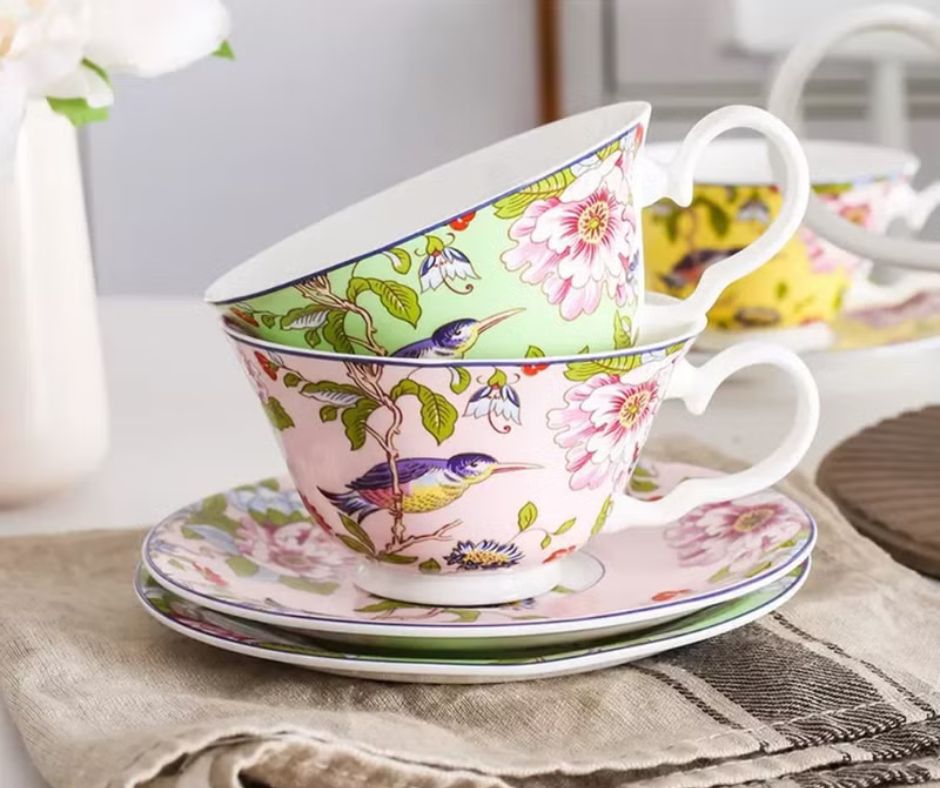
For over 240 years, the name Aynsley has been synonymous with the pinnacle of English Fine Bone China. In our first installment of the Brand Deep Dive series, we explore how a small pottery founded in 1775 became the preferred choice of the British Royal Family and a staple for serious collectors worldwide.
The Legacy: From 1775 to Today
Founded by John Aynsley in Longton, Staffordshire, the company’s history is a masterclass in longevity. While many potteries struggled during the Industrial Revolution, Aynsley thrived by mastering the formula for “Bone China”—a mixture of kaolin, feldspar, and bone ash that resulted in a translucent, incredibly strong, and milky-white ceramic.
By the time John Aynsley II took the reins in the mid-19th century, the brand had transitioned from a local pottery to a global powerhouse, eventually earning multiple Royal Warrants.
The Royal Connection
What cements Aynsley’s illustrious reputation is its proximity to the British Monarchy.
- Queen Victoria: An early patron who commissioned several sets.
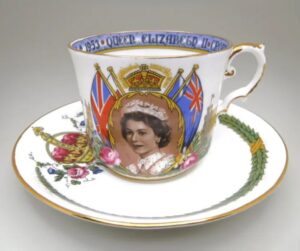
- Queen Elizabeth II: For her wedding to Prince Philip in 1947, she chose the Aynsley “Windsor” pattern.
- Princess Diana: The brand was a frequent gift choice for royal nuptials, cementing its reputation as the “wedding china of the elite.”
Defining Characteristics: The Aynsley Look
If you are holding an Aynsley piece, you are looking for three specific hallmarks of quality:
- Vivid Color Palettes: Aynsley is famous for its “heavy” colors—deep teals, rich burgundies, and cobalt blues that remain vibrant centuries later.
- Exquisite Gilding: Their use of 22k gold is generous. The gold is often etched or embossed, providing a textured finish that feels remarkably premium to the touch.
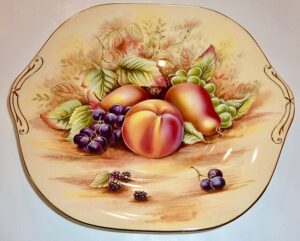
- The Orchard Gold Series: Perhaps their most iconic motif, featuring hand-painted fruits. Each piece is a miniature still-life painting.
Identifying Marks: The Backstamp Guide
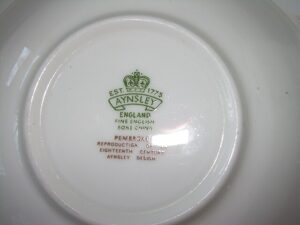
To verify an Aynsley piece, look at the underside. While marks changed over the decades, the most collectible pieces (1891–1970s) typically feature:
- A crown atop a scroll or circle.
- The words “EST. 1775” (a point of immense pride for the brand).
- “Aynsley England” in a distinctive serif or block font.
- Green backstamps are very common for mid-century production, while older marks may be in brown or blue.
Why It’s Collectible Now
In a world of “fast homeware,” Aynsley represents an era where art was not rushed. Collectors target Aynsley for:
- Resale Value: Unlike many mass-produced brands, rare Aynsley teacups (especially the “Butterfly” handle or “Cabbage Rose” interiors) continue to appreciate in value.
- Durability: Despite its delicate appearance, the high bone ash content gives the Fine Bone China a unique tensile strength, making it surprisingly resilient and resistant to chipping.
Sources for Further Exploration
Here are some interesting reads if wish to delve deeper into the rich history of Aynsley:
- Godden, G. A. British Pottery: An Illustrated Guide: An academic reference for identifying backstamps and historical ceramic formulas.
- The Victoria and Albert Museum (V&A): Archives on 19th-century British ceramic manufacturers and Royal commissions.
- The British Museum Collection: For records of early 18th-century ceramic manufacturing and material development in the Longton district.
Bring the English Elegance to Your Table
You’ve uncovered the heritage of a brand that has graced coronation banquets and royal weddings for over two centuries. We invite you to continue the journey by curating your own collection of these masterpieces. Browse our elegant selection of pieces, each one carrying a tangible link to the timeless English elegance.
Leave a Reply