
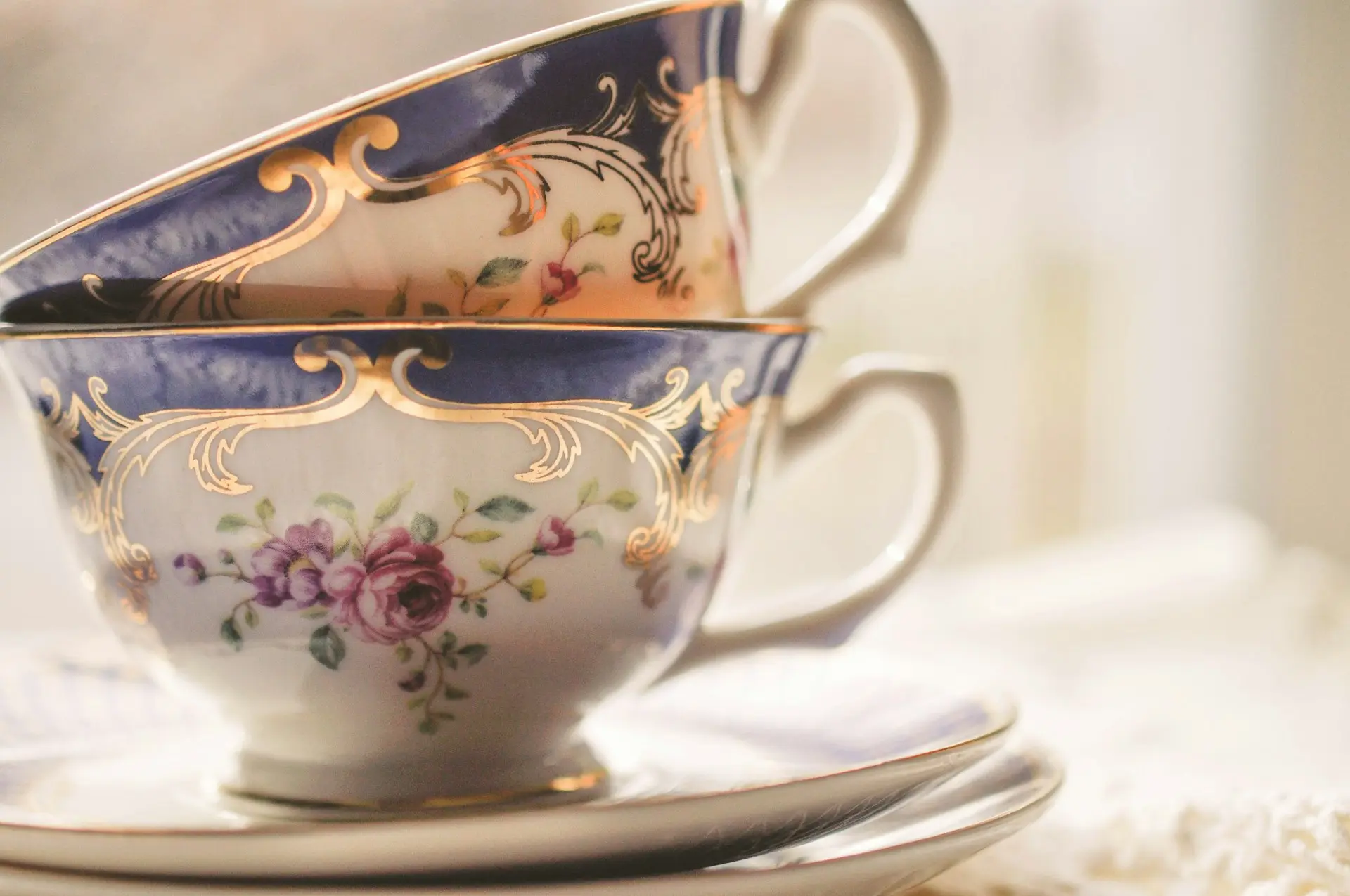
Don’t Just Buy a Teacup—Invest in a Piece of History
The beauty of vintage teacups lies in its story, but its value and longevity rest on its condition. Whether you are a new collector or seasoned enthusiast, knowing how to properly inspect a teacup and saucer is the most important skill you can possess.
At Porcelain Vignette we use these standards ourselves when curating our inventory. Here are the four essential criteria we check for—and that you should check for—before welcoming a new piece into your collection.
The Glaze Integrity: Crazing and Utensil Marks
The glaze is the transparent glass-like coating that protects the ceramic body and gives the teacup its shine. Any breakdown of the glaze is a significant factor in condition.
- Crazing: This refers to a network of fine, hairline cracks across the surface of the glaze. It occurs when the glaze and the ceramic body expand and contract at different rates, often due to age or improper handling (like sudden temperature changes).
- What to Look For: Crazing can sometimes be charmingly aged, but deep or heavy crazing significantly reduces the structural integrity and value. If the lines are dark (stained by tea or dirt), it indicates the crazing has penetrated the glaze, which is a major fault.
- Utensil Marks: Check the bottom of the saucer and the inside of the teacup for tiny, gray scratching, often called “silver marks.” These are caused by metal spoons or cutlery scraping the surface.
- What to Look For: Some light utensil marks are normal for older pieces. However, heavy, deep scratching can penetrate the glaze and detract from the cup’s beauty and smooth feel.
The Golden Rule: Wear on Gilt and Trim
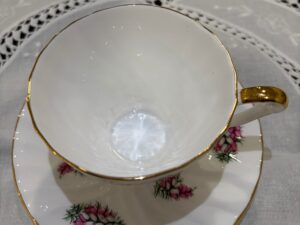
Many high-quality antique teacups feature gilt (gold) decoration on the rims, handles, or feet. Since this gold detailing is painted over the glaze, it is often the first element to show signs of wear.
- The Rim and Handle: These areas are constantly handled, washed, and exposed to liquid. Look for areas where the gold has faded, rubbed thin, or disappeared entirely.
- What to Look For: Minor loss (less than 10%) on the rim or handle is common and acceptable for an antique piece (known as “gentle wear”). Major loss (more than 50%) on the rim drastically affects the visual presentation and should reduce the price significantly.
Structural Damage: Chips, Cracks, and Repairs
This is the non-negotiable test. Any damage to the ceramic body itself will drastically diminish the value of a piece.
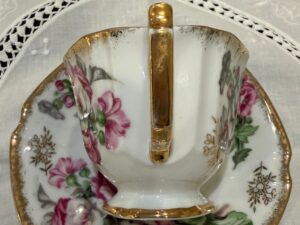
- Chips: Run your finger along the rim of the teacup and saucer. Are there any small, sharp, or missing pieces? A chip is a permanent loss of material.
- Cracks: Hold the cup up to a light source. A crack will appear as a dark, fine line, often starting at the rim and running down the body. Cracks are critical failures; a cracked piece is often considered unusable for serving.
- Repairs: Be wary of subtle signs of professional repair, often done with epoxy or by concealing the damage. A repaired piece, even if skillfully done, is worth far less than an undamaged one.
- The “Ping” Test: Gently tap the rim of the teacup with your fingernail. A healthy, undamaged piece of ceramic will emit a clear, high-pitched “ping” or “ring.” A piece with a crack or chip will produce a dull, low “thud” or a flat sound.
The Foot and Handle Balance
While not strictly a defect, the way a teacup is held and sits impacts its enjoyment and utility.
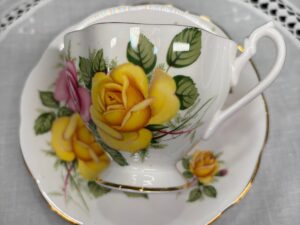
- The Foot (Base): Turn the teacup over. Is the foot rim clean? More importantly, when the cup is sitting flat, does it wobble? A slight wobble indicates an uneven or warped base.
- The Handle: Inspect where the handle joins the body of the cup. Look for hairline cracks at these stress points. Additionally, ensure the handle is large enough and comfortable enough for you to hold. If the handle is too small for a practical grip, it will be destined for display only.
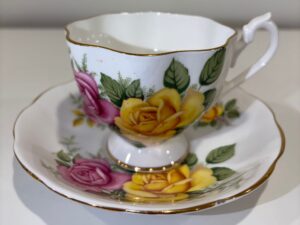
Ready to Curate Your History?
We hope you now feel confident in the essential criteria for selecting high-quality antique pieces. We invite you to continue the journey by curating your own collection. Browse our elegant selection of teacups and saucers, each one carrying a tangible link to history and timeless elegance.
Leave a Reply