

There is a unique, warm glow that only fine gold accents can cast across a tablescape. For many collectors, these shimmering edges are what make a piece feel truly special. However, because the gold used on antique teacups and saucers is a soft precious metal applied on top of the glaze, it requires specific care to remain bright and intact for years to come.
At Porcelain Vignette, we believe that proper care is the secret to protecting the value of your collection. Here is our guide on how to care for your gold-rimmed collections.
Why Do Gold Rims Fade?
To care for your pieces, it is helpful to understand how they were made. In the world of heritage ceramics, gold is almost always an “overglaze” application.
While the floral patterns on your bone china are often protected under a clear glaze, the gold sits directly on the surface. This makes it highly sensitive to friction and chemicals. When you see a faded or “rubbed” rim on a vintage saucer, it is rarely due to age alone—it is usually the result of abrasive cleaning or improper handling over many decades.
1. The Most Important Rule: Hand-Wash Only
If you want to preserve the gold on your fine bone china and porcelain, the dishwasher is your biggest enemy.
Modern dishwasher detergents are designed to be aggressive, they often contain harsh chemicals and citrus acids that act like sandpaper on gold leaf. Furthermore, bone china is sensitive to extreme temperature shifts. The high heat of a dishwasher can cause the ceramic body and the gold to expand at different rates, leading to tiny flakes of gold peeling off.
To keep your rims bright, always hand-wash your pieces in lukewarm water using a mild, gentle dish soap.
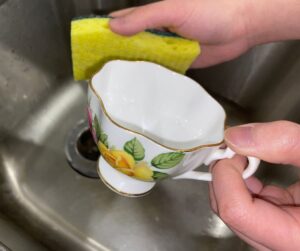
2. Storage Strategy: Prevent Stack Friction
Surprisingly, most damage to gold rims occurs inside the cupboard, not at the table. When teacups or saucers are stacked on top of one another, the unglazed “foot” of the top piece (which is often slightly rough) acts like sandpaper against the gold rim of the piece below it.
To prevent this “stack friction,” we recommend placing a buffer between every piece. While professional felt dividers are ideal, simple acid-free tissue paper or even soft paper napkins will suffice.
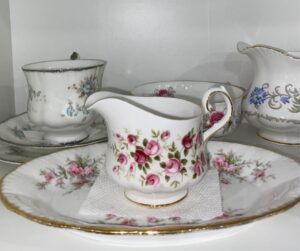
3. Polishing with Purpose: Handling Tarnish
Over decades, real gold accents can develop a slight copper-toned tarnish due to oxidation of the base metals used in the firing process. While it is tempting to reach for a silver polish, these are far too abrasive for delicate ceramics and can rub the gold right off the piece.
Instead, use a soft microfiber cloth and a drop of extremely mild soap. Gently pat the rim rather than rubbing it vigorously. If the piece is particularly old, remember that “less is more.” A slight patina is often part of the charm of an antique, it is better to have a slightly dull original rim than one that has been scrubbed away.
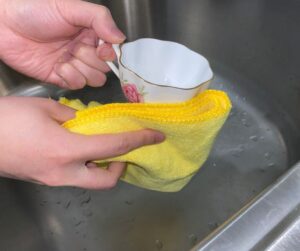
Preserve Your Collection
Whether you prefer the translucency of bone china or the classic weight of porcelain, these pieces were meant to be cherished. By following these simple steps, you ensure that the golden glow of your collection continues to shine for the next generation.
Leave a Reply