
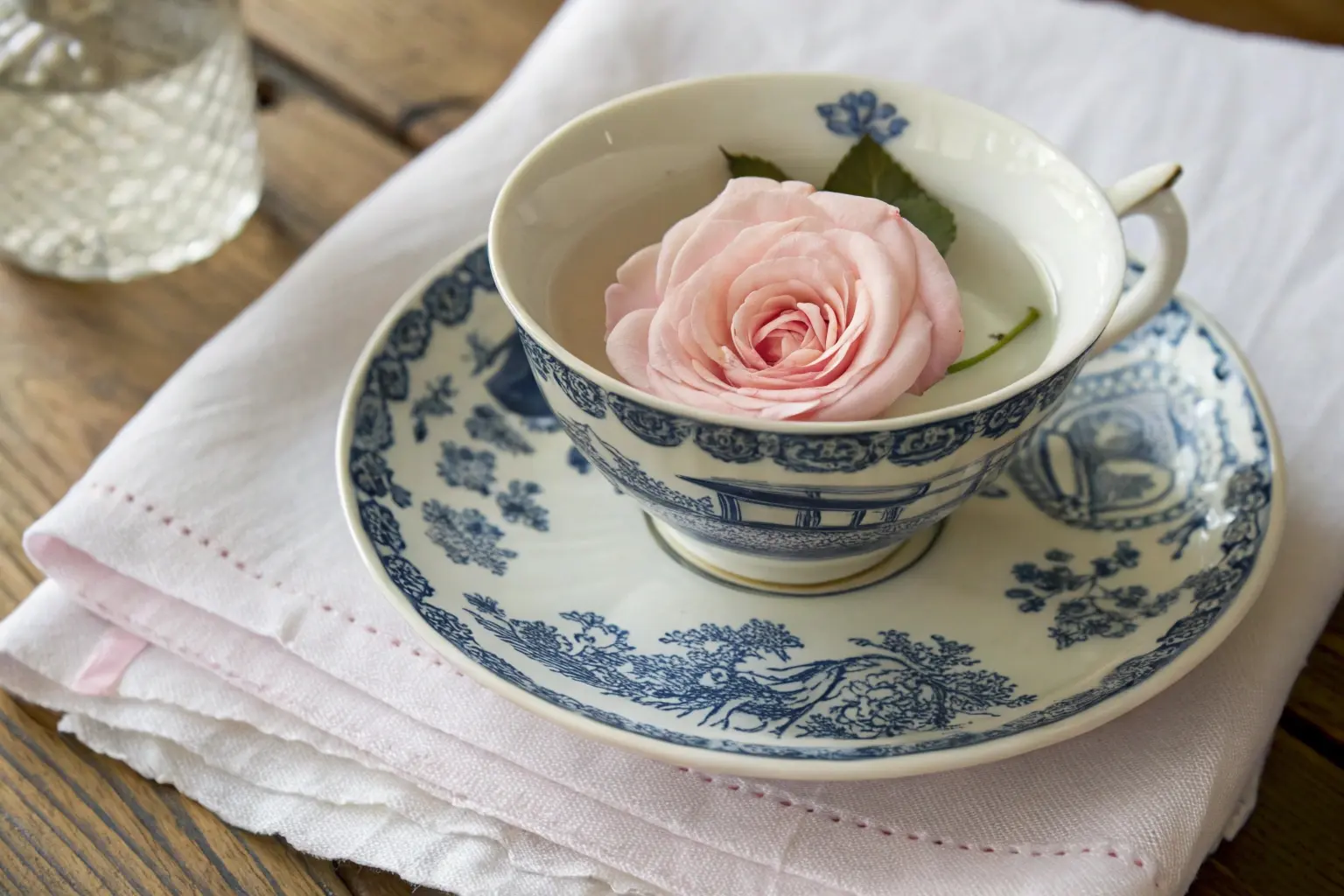
Reimagining the Ritual: Three Ways to Transform Antique Teacups
At Porcelain Vignette, we believe the true value of an antique is realized when it is integrated into your contemporary life, not just admired from afar. While there is nothing quite as classic and timeless as sipping hot tea on a teacup, there is something incredibly fun and enjoyable about pieces that gracefully transcend their original purpose.
A beautifully crafted teacup and its matching saucer are more than historical relics—they are perfectly scaled containers ready to elevate any small space in your home.
Here are three unexpected uses to transform your antique teacup from a shelf display into a functional piece of curated décor.
1. The Elegant Jewelry Holder
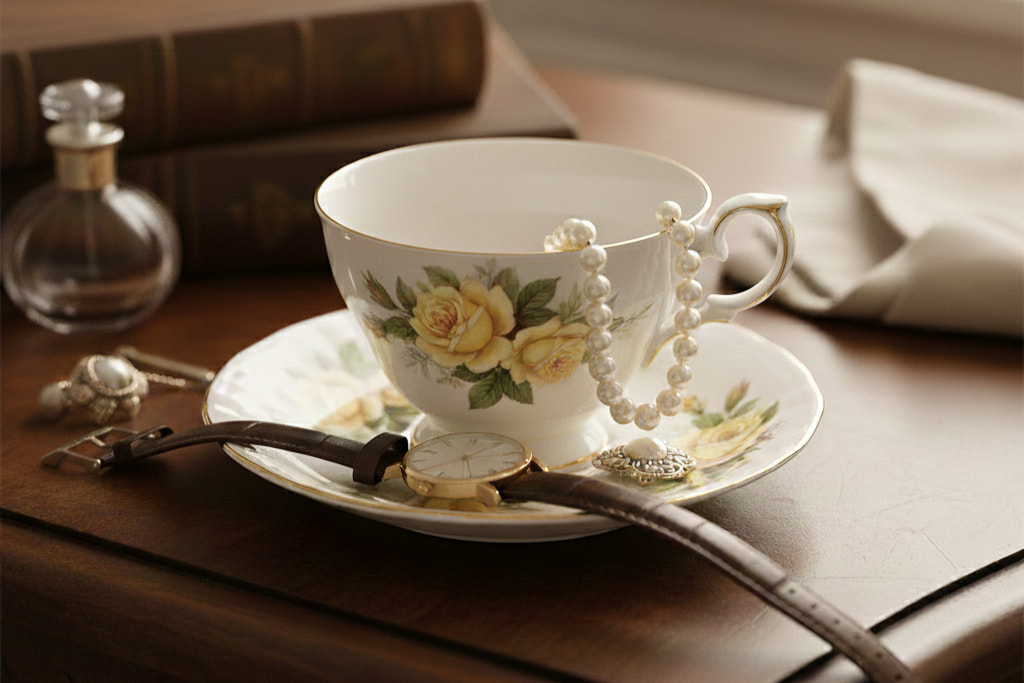
Antique teacups are uniquely suited to be beautiful catch-alls for small, precious items. The delicate bowl and sturdy handle create a visually appealing alternative to a standard jewelry tray, making it perfect for placing on the vanity or nightstand.
How to Curate It:
- For Rings and Earrings: Use the deep well of the teacup to hold delicate stud earrings and small hoop earrings. The smooth porcelain protects metal finishes from scratching.
- For Bracelets: Drape a delicate chain or pearl bracelet over the handle of the cup. This keeps the jewelry visible and untangled, turning the teacup itself into a display stand.
- The Saucer’s Role: Use the accompanying saucer as the perfect resting spot for your watch or larger earrings that you remove right before bed.
This celebrates the inherent delicacy of the porcelain by pairing it with other delicate items, lending an instant air of sophistication to your dressing area.
2. The Aromatic Potpourri Display
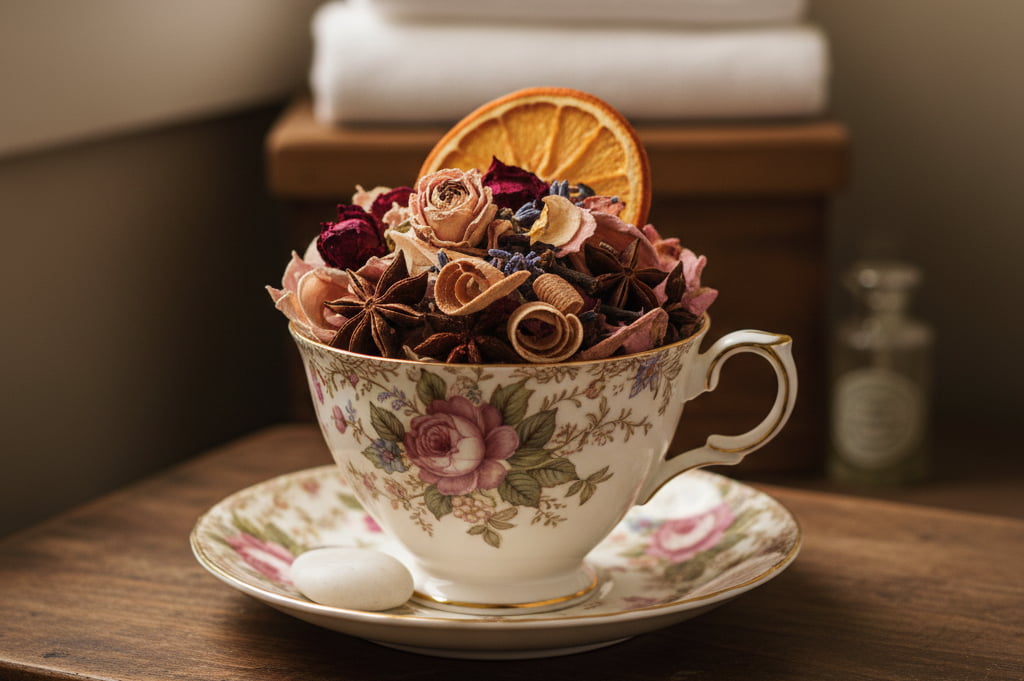
Turn your teacup into a sensory centerpiece that adds a subtle, delicate fragrance to your small spaces. By using only dry botanicals, you ensure your teacup remains unharmed, while creating a truly bespoke décor accent. This is perfect for placing in the powder room or linen closet.
How to Curate It:
- Choose Soft Fillers: Use dried materials like rose petals, lavender buds, cedar shavings, or spice pods (cloves, star anise). These are soft and will not scratch the delicate glaze.
- Avoid Oils: While essential oils are traditionally used with potpourri, we recommend applying them only to the dry fillers themselves, and never directly to the teacup, to prevent any oil seepage or staining of the glaze.
- The Saucer’s Role: The saucer is perfect for holding a separate decorative element, like a small, flat stone or a single piece of dried citrus, or simply to complete the traditional tea service presentation.
This allows you to introduce warmth and fragrance into your home without compromising the future usability of your antique teacup.
3. The Floating Bloom Display
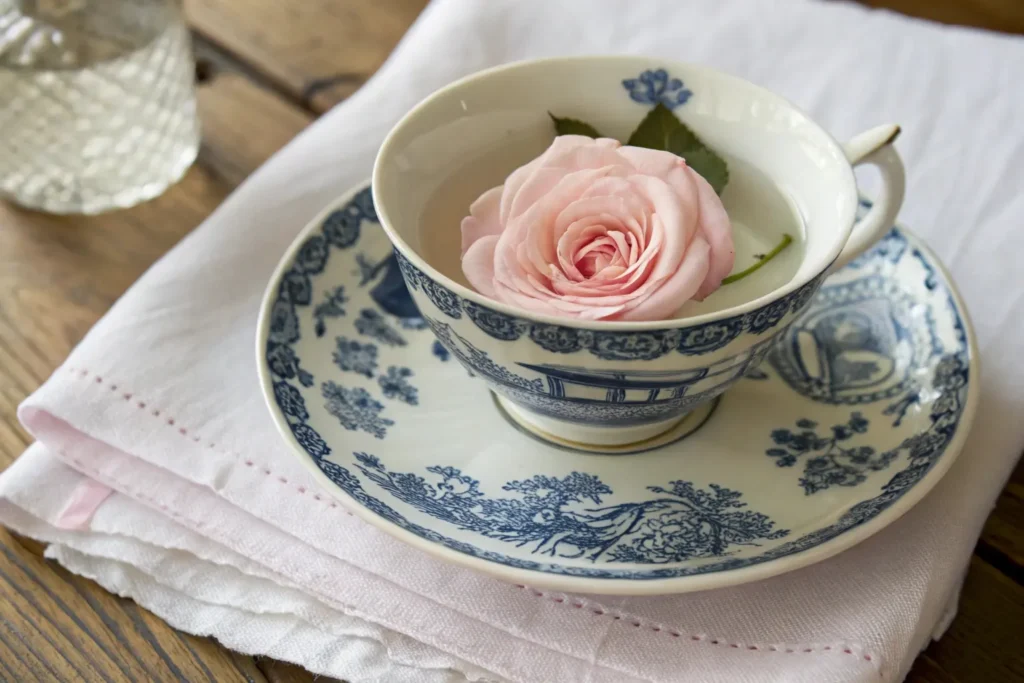
The teacup’s perfect scale makes it an ideal vessel for miniature floral arrangements. This requires only soft materials (water and petals), and elegantly centers the eye on the teacup itself. It is perfect for placing on the dining table or sideboard.
How to Curate It:
- The Single Bloom: Place a single, cut flower head (such as a gardenia, camellia, or small rose) directly into the cup with just enough water to keep the stem submerged. The bloom will float gracefully.
- The Mini Bud Vase: Use the teacup as a small bud vase for cuttings like lavender sprigs or eucalyptus leaves, using the handle for stabilization.
- The Saucer’s Role: Use the saucer to hold any overflow or dew, but also to scatter a few extra petals or a tiny sprig of green, creating a more dramatic, layered display.
This emphasizes the teacup’s beauty and pattern by surrounding it with soft, organic materials, creating a focused, fresh accent for any room.
Ready to Find Your Multi-Purpose Piece?
The magic lies in re-imagination. Browse our current collection of curated teacups and saucers, and discover the next piece that is ready to start its second life in your home.
Leave a Reply